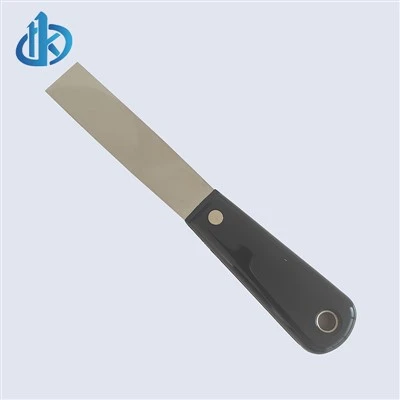
Unboxing a new taping knife is like slipping on a fresh pair of jeans-stiff, a little awkward, and nowhere near ready for hard work. That shiny blade might look perfect, but trust me, it needs a little TLC before it becomes your drywall sidekick. Breaking it in isn't rocket science, but skip this step, and you'll be fighting mud clumps and uneven spreads like a cat vs . um pepino .
First, lose the factory edge. New blades often have a sharp, brittle tip that'll tear paper tape faster than a kid rips wrapping paper. Grab some 120-grit sandpaper and gently run it along the edge at a 45-degree angle, like you're buffing out a scratch on a car. Do this until the tip feels smooth to O toque-não mais "snag" quando você arrasta um dedo através dele . é como suavizar a borda de um novo livro, então ele abre sem ração .
Em seguida, apresente -o para lama gradualmente . não mergulhe em grandes costuras primeiro; start with small patches or corner beads. Let the blade get used to gliding through joint compound, adjusting to the weight of your hand. Think of it as a first date-take it slow, get to know each other. Press too hard too soon, and you'll bend the blade or leave ugly ridges, like forcing a dance with someone who hasn't learned the steps.
Here's a pro move: After each use, wipe the blade clean, then rub a tiny bit of joint compound on the edge and let it dry. This forms a thin protective layer, like seasoning a cast-iron pan, making future spreads smoother. And don't forget the handle-grip it loosely at first, letting your hand mold to its shape, so it feels like an extension of your arm by the end of the Projeto .
Quando você enfrentou alguns metros de costuras, essa faca nova parecerá uma velha responsiva a amigos, confiável e pronta para fazer suas paredes brilharem . quebrá-lo não é "consertar"; Trata-se de construir um relacionamento ., trate-o corretamente, e ele seguirá seu líder, transformando lama bagunçada em paredes dignas de obra-prima .